Blog ·
Why was Farscape canceled?
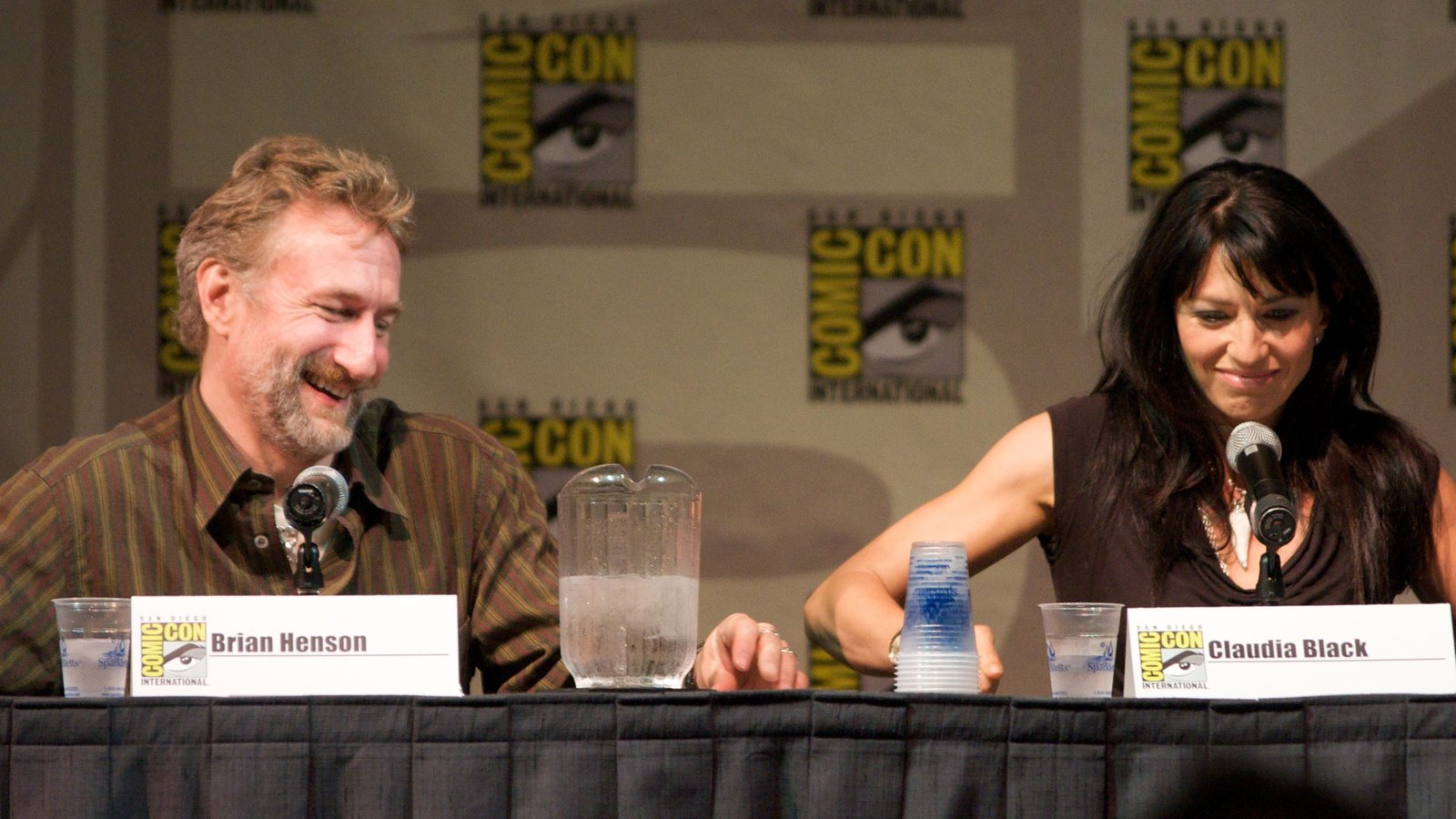

Farscape was canceled in September 2002 because the Sci Fi Channel decided it could no longer pay for a fifth season: the channel said ratings had fallen while the cost of making the show had risen steeply. The people who made it tell a fuller story, of a negotiation over money that went wrong at a moment when the show's studio, The Jim Henson Company, was in financial trouble. Both accounts agree on one thing: it was about money, not about the story. Our page on Farscape covers the whole series, with every episode from the rights holder's official uploads.
When was Farscape canceled?
The news broke in early September 2002, after the fourth season had been filmed but before most of it had aired. Anime News Network reported on Sep 10, 2002 that Farscape "will not be returning to the Sci Fi Channel for a fifth season."
That timing is why the series ends on a cliffhanger. The last regular episode, Bad Timing, aired on Mar 10, 2003, and closes with "To Be Continued" although everyone finishing it knew there was no fifth season to continue in.
| Premiered | Mar 19, 1999, on the Sci-Fi Channel |
| Cancellation reported | Sep 10, 2002, with season four already made |
| Last regular episode | Mar 10, 2003 ("Bad Timing", a cliffhanger) |
| The ending | The Peacekeeper Wars, a two-part miniseries, Oct 17 and 18, 2004 |
What reason did the Sci Fi Channel give?
Ratings and cost. In a list of questions and answers about the decision, reprinted by Muppet Central on Sep 18, 2002, the channel said: "The fact is, ratings for the series have declined." It gave these figures:
- Season four's new episodes averaged a 1.2 rating (1,544,000 viewers), down from a 1.4 in 2001.
- Farscape lost 29% of the ratings of the program before it.
- There was "a very steep rise in cost between seasons 3 and 4," and the show was "failing to meet its advertising estimates."
The channel concluded that it "could not justify production of another 22 episodes at Farscape's current high cost." Fans had suspected that the money was going to Stargate SG-1 instead; the channel answered that plainly: "No," the two negotiations were "completely separate."
In January 2003, Sci Fi executive Bonnie Hammer gave more detail in the Pittsburgh Post-Gazette, in an article reprinted by Muppet Central. She said the channel had tried to order 13 episodes instead of the 22 in the contract, to end the story properly, but "the bottom line was we couldn't come out with the financial deal that made sense." She also said a two-hour or four-hour ending had looked almost as expensive as the difference between 13 and 22 episodes, "because you still need all the cast, the set." And she offered a view of the show itself: "The show got too narrow, it became serialized."
What did the people who made Farscape say?
That it was a business decision, and not about the show's quality. In the same Post-Gazette article, co-creator Rockne S. O'Bannon said the executives who decided "didn't create it," that "it wasn't a huge hit," and that they saw its cost on the balance sheet.
Years later he went further. In a 2018 interview quoted by The Companion in 2023, O'Bannon said the channel raised cancellation "as a negotiating ploy, to see if there was some wiggle room on the licensing fee for Season 5," and that it was "entirely a business decision." In his telling, Sci Fi wanted the show back, but its bluff was called: the studio's German owners, who were having "all sorts of legal issues and problems," accepted the cancellation. The Companion also points to two pressures behind the falling numbers and rising costs: the ratings dip came after Sci Fi moved the show to a later 10 pm slot, and production costs rose with the value of the Australian dollar against the US dollar.
What did the Henson company's troubles have to do with it?
A good deal, by O'Bannon's account. The German media company EM.TV had bought The Jim Henson Company in 2000 for $680 million, and by 2003 it was selling it back to the Henson family for a fraction of that: Variety reported (as reprinted by Muppet Central on Aug 4, 2003) a final price of $84 million. Farscape was a Henson production, so the cancellation talks happened while its studio was for sale and its owner was in trouble.
Why the accounts differ
They describe the same events from opposite sides of the table, and they do not really contradict each other.
| Who | Their reason |
|---|---|
| Sci Fi Channel, 2002 | Ratings fell and costs rose too far to justify 22 more episodes |
| Bonnie Hammer, 2003 | No deal for a shorter, 13-episode final season made financial sense |
| Rockne S. O'Bannon, 2003 and 2018 | A business decision; a negotiating move whose bluff the studio's troubled owners called |
What we cannot tell you is what the contract said or what offers were made, because none of that has been published. Each side also had reasons to tell it their way: the channel was answering angry fans, and the creator was defending the show. A note on the figures, too: the 1.2 and 1.4 ratings are the channel's own, from its 2002 answers, and we have found no independent source for them.
How did Farscape get an ending?
The fans fought for one. The "Save Farscape" campaign that followed was, Salon wrote in March 2003, "one of the largest and most sophisticated fan campaigns in television history." Salon reported that fans even tried to raise more than $750,000, "about what Sci Fi pays to broadcast each episode."
It worked, in part. In April 2004, Multichannel News reported that Sci Fi would air a four-hour Farscape miniseries, and noted the "major backlash" from fans after the cancellation. Farscape: The Peacekeeper Wars, directed by Brian Henson, aired on Oct 17 and 18, 2004, and resolved the cliffhanger in place of the fifth season that was never made. You can watch both parts on Heartipedia, from the rights holder's own uploads.
A note on our sources
Several of the 2002 and 2003 sources survive as reprints on Muppet Central, a long-running fan news site, which credits the Sci Fi Channel, the Pittsburgh Post-Gazette and Variety as the original publishers. We link the reprints, which name their originals. The quotes from O'Bannon's 2018 interview come to us through The Companion's article, which links the original.
More from the blog
 How did Patrick Stewart die?Sir Patrick Stewart died at home in Los Angeles on Wednesday, Oct 28, 2026, aged 86, after Alzheimer's disease and Lewy body dementia. What those conditions are, his life in brief, and the tributes.
 When will the Roman Space Telescope release its first images?NASA expects to release the Roman Space Telescope's first science images by early 2027. It has already taken test images, and it is in its final commissioning phase.
 How many rovers are on Mars?Two rovers are working on Mars today, Curiosity and Perseverance. Six have driven there in all, and two more reached the planet without ever driving.