Blog ·
Who invented the internet?
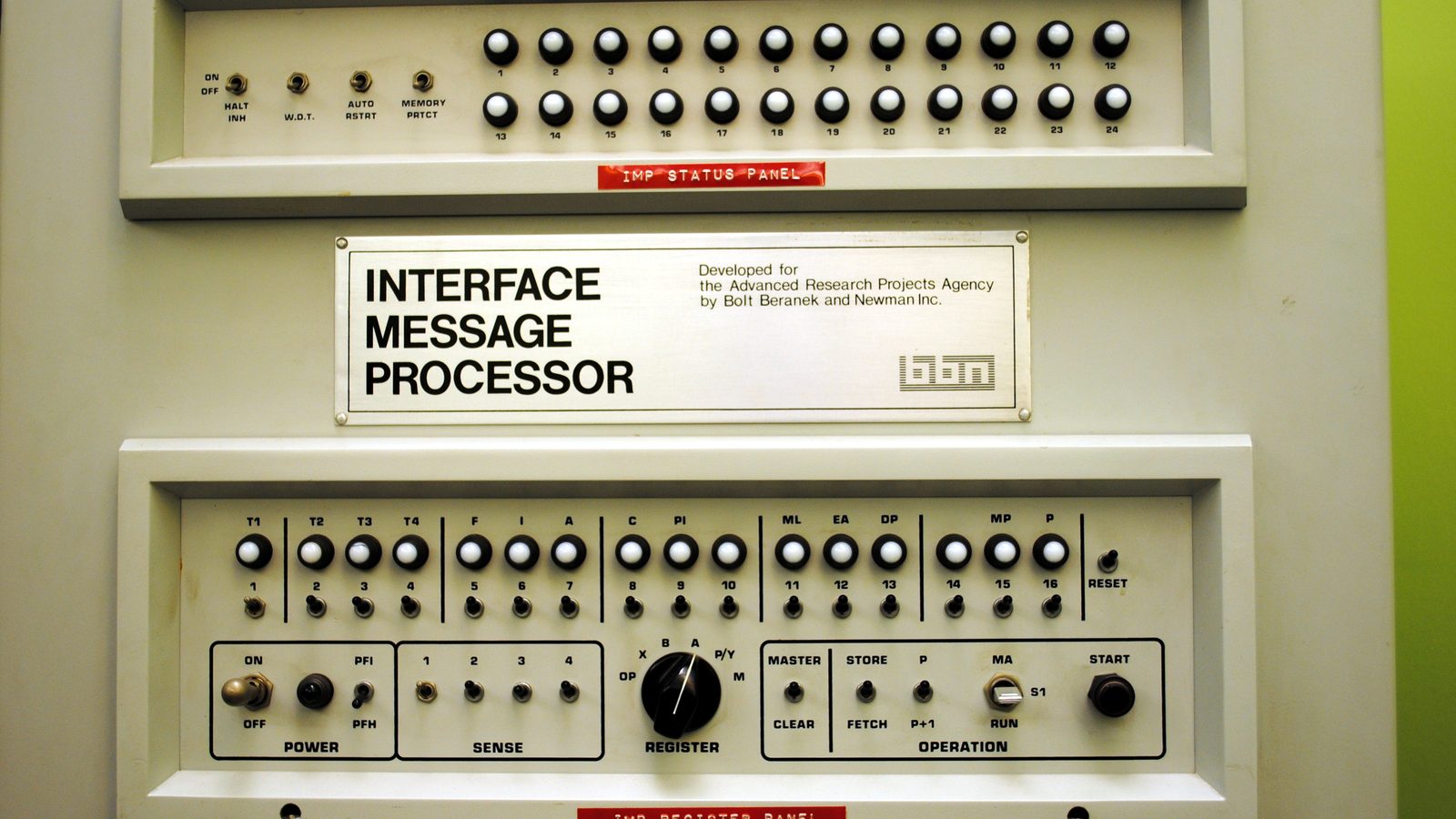

No single person invented the internet. The two people most often credited are Vint Cerf and Bob Kahn, who designed TCP/IP, the protocols the internet still runs on, and won the Turing Award for it in 2004. They built on packet switching, an idea worked out in the 1960s by Leonard Kleinrock, Paul Baran and Donald Davies, and on ARPANET, the U.S. research network that sent its first message in 1969. Cerf and Kahn say so themselves: "No one person or even small group of persons exclusively 'invented' the Internet." Our page on the Internet tells the whole story with its sources.
The image above is the front panel of the first Interface Message Processor, the machine at UCLA that sent the first message over ARPANET.
Who are the "fathers of the internet"?
The title usually goes to Vint Cerf and Bob Kahn. The Association for Computing Machinery gave them its highest honor, the Turing Award, in 2004, with a citation that reads: "for pioneering work on internetworking, including the design and implementation of the Internet's basic communications protocols, TCP/IP." The ACM's page on Cerf says the two "led the design and implementation" of TCP/IP, "the basis for the current internet."
What they solved was a specific problem. ARPANET was one packet network, and more were coming: the Internet Society's history names packet radio and packet satellite networks among the first. It says Kahn introduced the idea of "open-architecture networking" shortly after arriving at DARPA, the U.S. defense research agency, in 1972: each network would keep working its own way, with no internal changes needed to connect it, and gateways would pass traffic between them. That network of networks is what the word "internet" means. In the spring of 1973 he asked Cerf, then at Stanford, to work with him on the details, and they published the design in 1974.
Who did what?
| Who | What | When |
|---|---|---|
| J.C.R. Licklider (MIT, then DARPA) | Described a "Galactic Network" of computers anyone could reach from anywhere | 1962 |
| Leonard Kleinrock (MIT, then UCLA) | Published a paper on packet switching theory; his UCLA lab became ARPANET's first node | 1961, 1969 |
| Paul Baran (RAND) | Designed a distributed network that could survive an attack on its nodes and links | 1964 |
| Donald Davies (National Physical Laboratory, UK) | Developed packet switching and gave the "packet" its name | 1965 |
| Larry Roberts (DARPA) | Planned ARPANET | 1967 |
| Bob Kahn and Vint Cerf | Designed TCP/IP, the protocols that join networks into one internet | 1973 to 1974 |
| Tim Berners-Lee (CERN) | Invented the World Wide Web, which runs on the internet | 1989 to 1990 |
The sources for each row: Licklider, Kleinrock, Roberts and Kahn and Cerf are from the Internet Society's history; Baran's work is his 1964 memorandum On Distributed Communications, which RAND publishes; Davies is from the National Physical Laboratory's own timeline; Berners-Lee is from CERN.
Who invented packet switching?
Three people, separately. Packet switching breaks a message into small pieces that travel across the network on their own and are put back together at the other end, instead of holding a whole line open for one call as the telephone network did. The Internet Society's history says the work at MIT (1961 to 1967), at RAND (1962 to 1965) and at NPL (1964 to 1967) "had all proceeded in parallel without any of the researchers knowing about the other work," and that the word "packet" was adopted from the NPL work.
Baran's RAND memorandum of 1964 shows the payoff he was after: a distributed network that keeps working when enemy attacks take out some of its nodes and links. The National Physical Laboratory credits Donald Davies and his team with inventing packet switching in 1965, and says it built a packet-switched network for some 200 users in 1970 that was later linked to ARPANET.
When was the internet invented?
It depends on which moment you count:
- Oct 29, 1969: the first message over ARPANET, sent from Kleinrock's lab in Room 3420 of Boelter Hall at UCLA. UCLA calls it the birth of the internet. The Internet Society dates the first packet switch at UCLA to September 1969 and the first host-to-host message, to the Stanford Research Institute, to the month after.
- 1974: Cerf and Kahn's paper "A Protocol for Packet Network Intercommunication," which the ACM calls "seminal," lays out the internet's architecture. In 1978, the ACM adds, TCP was split into two protocols, TCP and IP.
- Jan 1, 1983: ARPANET switched from its old protocol to TCP/IP on a single "flag day," every host at once, as the Internet Society describes. Cerf and Kahn themselves wrote that "the Internet, as we know it today, was not deployed until 1983" (see their statement below).
If you want one date for the internet rather than its ancestor ARPANET, Jan 1, 1983 is the strongest candidate.
Did Tim Berners-Lee invent the internet?
No, he invented the World Wide Web, which is a different thing. The internet carries data between computers; the Web is one service that runs on it, a system of linked pages read in a browser. Email, video calls and online games use the internet without using the Web.
CERN records that Berners-Lee wrote the first proposal for the Web in March 1989, that by the end of 1990 he had the first web server and browser running there, and that on April 30, 1993, CERN made the Web's software available royalty-free. By then the internet had been running on TCP/IP for ten years.
Did Al Gore say he invented the internet?
Not in those words. In a 1999 interview he said: "During my service in the United States Congress I took the initiative in creating the Internet." The joke that he claimed to have "invented" it followed him through the 2000 campaign. In September 2000, Kahn and Cerf wrote a statement defending him, which Cerf sent to the nettime mailing list. They wrote: "We don't think, as some people have argued, that Gore intended to claim he 'invented' the Internet." They credited him as "the first political leader to recognize the importance of the Internet" and with passing the High Performance Computing and Communications Act of 1991. Not everyone agreed: the internet historian Ronda Hauben replied on the same list that the statement left out the role of ARPA, the government agency that funded the work.
Where do the sources disagree?
On who came first with packet switching. The Internet Society's history says Kleinrock "published the first paper on packet switching theory in July 1961." The National Physical Laboratory says Davies and his team "invent the method" in 1965. Both can be partly right, since the Internet Society itself says the three lines of work ran in parallel, but they do not agree on who was first.
It is also worth knowing who wrote the most cited account. The Internet Society's "Brief History of the Internet," published in 1997, is by nine of the pioneers themselves, among them Cerf, Kahn, Kleinrock and Roberts. It is a primary source and a good one, but it is the people who built the internet describing their own work. The NPL timeline is likewise an institution describing its own. Where the two differ, neither is a neutral referee, which is why the fair answer to "who invented the internet?" is a list of names, not one.
More from the blog
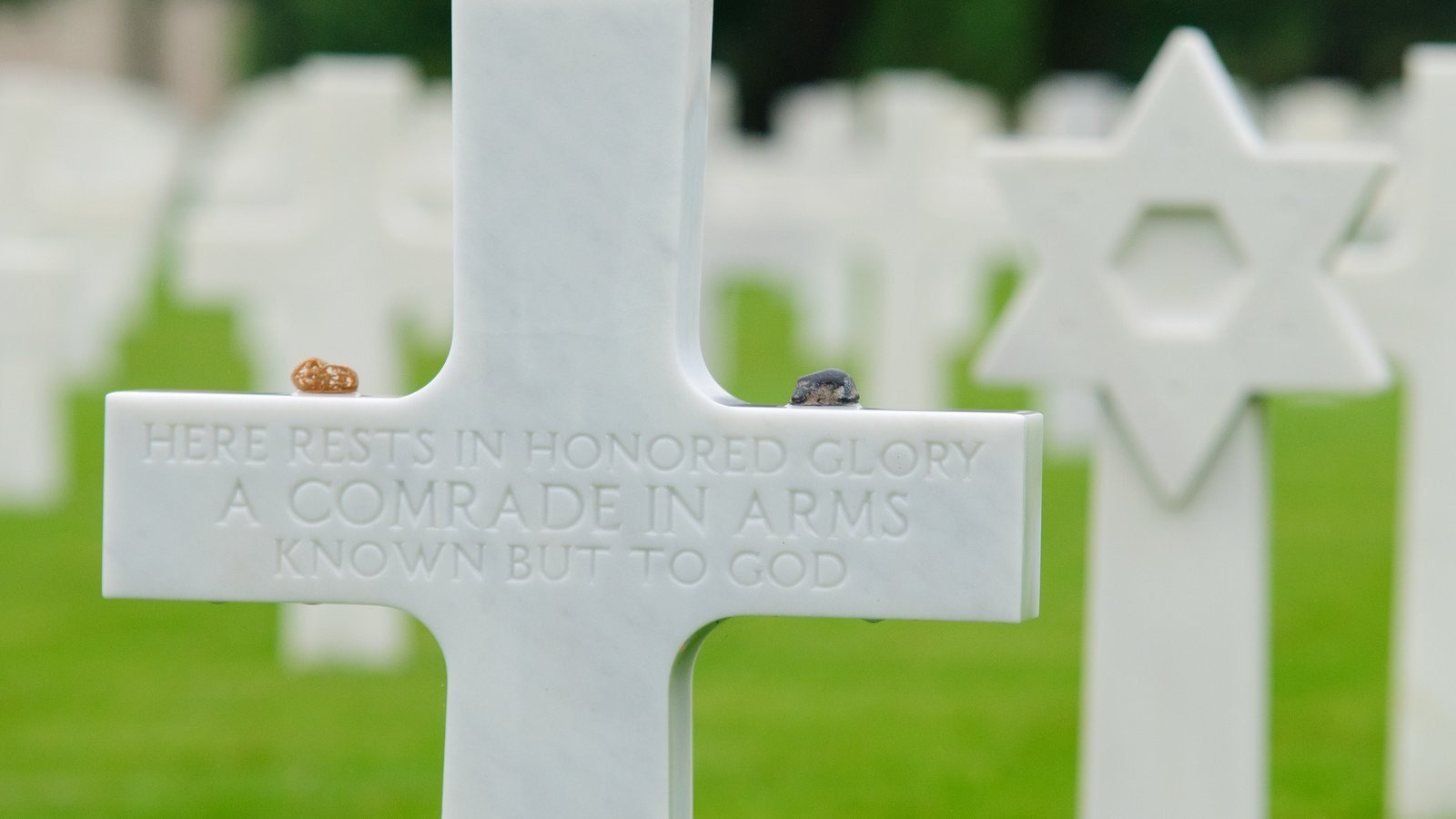 How many people died in World War II?Most estimates put the deaths of World War II at about 60 to 75 million people, most of them civilians, but nobody knows the exact number. Where the figures come from, why they range so widely, and the counts for the countries that lost most.
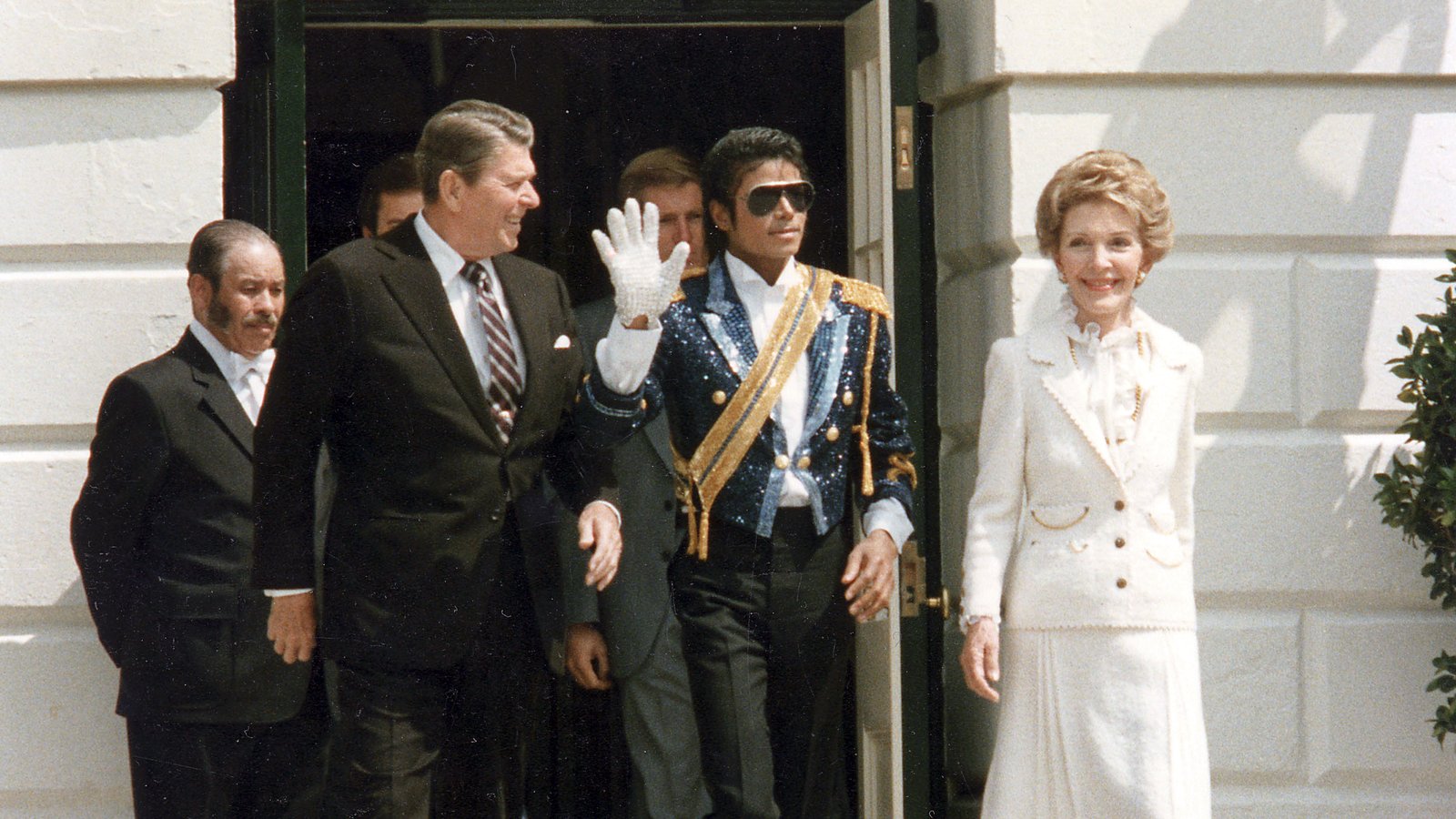 How many copies did Thriller sell?Guinness World Records puts Michael Jackson's Thriller at more than 67 million copies worldwide, and the RIAA has certified 34 million units in the US. Why the figures differ, and why some say 70 or 100 million.
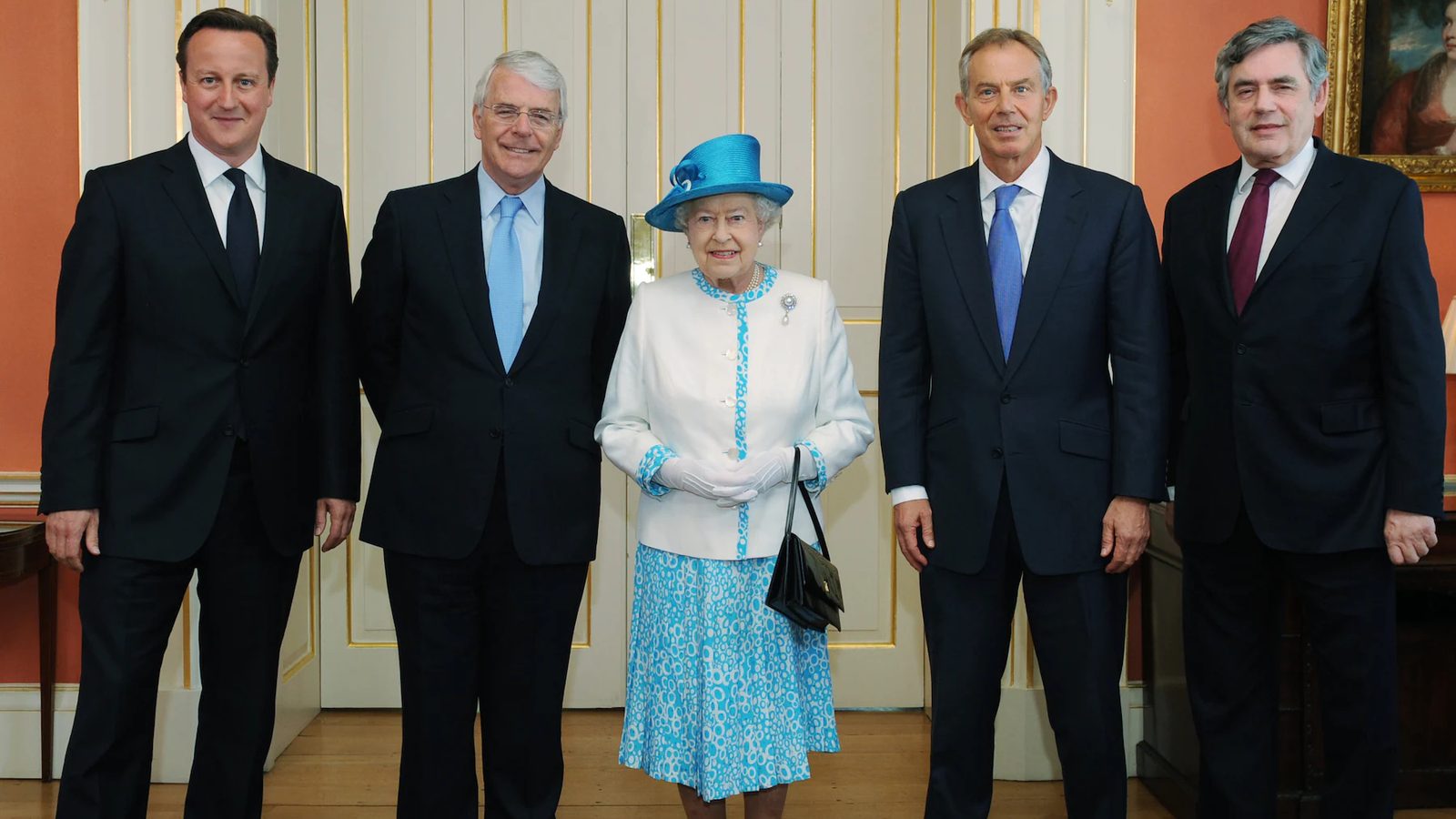 How many prime ministers did Elizabeth II have?Fifteen UK prime ministers served under Queen Elizabeth II, from Winston Churchill in 1952 to Liz Truss in 2022. Here is the full list, how the count works, and why some sources say 14.